Posts

Life in lock-down (2020 pandemic)

Image
Who would have thought what our lives would be if we were to live in cages. Being isolated from the rest of the society and almost being marooned in a deserted island gave me a lot of time to reflect on all those things which I had taken for granted. As an young adult i always enjoyed strolling around in the park, often meeting with my school friends on the weekends and grabbing a snack from the nearby french cafe while reading my favorite book laying aimlessly on that not so comfortable park bench and gentle breeze used to brush my face making a mess of my salt and pepper hair. Here in this same old-school park bench, was where I met the love of my life and in this very spot where I had asked her hand for marriage. Now in recent days, considering the horrors of world wide global pandemic COVID 19, it only seems like a dream of the past, if one is thinking of venturing into the outdoors. Different people bears different mechanisms for coping with disastrous scenario...
Transport protocol for transfer of a neonate

Image
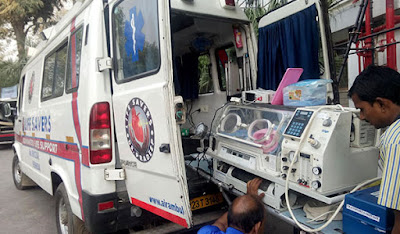
Importance of standard transport protocol for transfer of a neonate from a primary care center to a referral center. Treatment of the sick neonate in specialized neonatal intensive care units has been associated with decrease in mortality and morbidity. Organized emergency neonatal transport systems developed and became an important component in the regionalization of perinatal care [1-4]. In utero transfer is the safest transfer but unfortunately, preterm delivery, perinatal illness and congenital malformations cannot always be anticipated, resulting in a continued need for transfer of babies after delivery [5]. These babies are often critically ill, and the outcome is partly dependent on the effectiveness of the transport system [6]. Facilities for neonatal transport in India are dismal. Most neonates are transported without any pre-transport stabilization or care during transport. Any available vehicle is used which often takes long hours to reach. With less experienced staff, the...

Scalp injuries- Explained by Dr Saad Andalib ( A review article).

Image
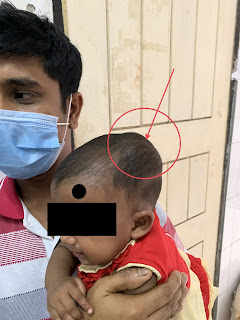
  Scalp hematomas : Scalp hematomas  are an important indicator of potential TBI, especially when they appear in younger infants (eg, <6 months of age), are larger (eg, >3 cm), and are located in the temporal, parietal, or occipital regions. Hematomas of the neonates: Introduction: Neonatal hematomas refer to a grouping of extracranial injuries that occur during delivery and are secondary to edema or bleeding into the varying locations within the scalp and skull. Caput Succedaneum : Edematous  region  above the periosteum  that  crosses suture lines Presents at birth, typically after prolonged or difficult labor due to compression against bony prominence of maternal pelvis Visualize pitting edema on physical exam Discoloration may be present Usually  resolves within a few days  and requires no further treatment Complications  to look out for include  long term scarring and alopecia Halo scalp ring  is an alopecic ring that can...

Hemangioma- A step by step approach

Image
What is a hemangioma? Hemangioma is a vascular neoplasm or a vascular anomaly due to proliferation of blood vessels. They occur anywhere in the body, but skin and oral mucosa in the region of the lips, tongue, and buccal mucosa are most commonly affected. Therefore, the dentist or oral surgeon should be informed about their clinical aspect, diagnosis, and therapy.  The gold standard for hemangioma treatment, especially for smaller circumscribed lesions and peripheral hemangiomas, is conventional surgical excision.  However, complications that arise from conventional invasive surgical procedures such as excessive postoperative bleeding compelled the use of other different therapeutic alternatives including systemic corticosteroids, laser therapy, cauterization, cryotherapy, radiotherapy, and sclerotherapy. Hemangiomas are more common in girls than in boys. They are more common in premature infants, twins and Caucasian children. Most hemangiomas go through several phases of grow...

Recognizing a Ranula

Image
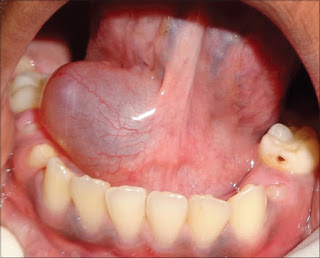
  What is ranula? Ranulas are clear or bluish cysts caused by a blocked salivary gland in the mouth. These slow-growing benign growths are found on the floor of the mouth and can vary in size. Some cysts remain small, whereas others enlarge and cause problems.  Pictures of ranula What are symptoms of a ranula? A clear or bluish translucent growth on the floor of the mouth is the main symptom of a ranula. They don’t typically cause pain, so you may not notice it until the cyst increases in size. If you have a simple ranula, swelling is confined to the sublingual gland. This is the smallest of the three paired salivary glands around the throat and mouth. Another type of ranula is a diving or plunging ranula, which occurs when a simple ranula ruptures. The rupture triggers the formation of a pseudocyst that extends into the neck through a defect of the mylohyoid muscle, which is a group of neck muscles that control the tongue. This causes a mass in the submandibular space (the fa...

Q and A regarding Hirschsprung's Disease

Image
  Hirschsprung’s Disease in Newborns Questions   1.       What are the characteristic presenting features in neonates with Hirschsprung’s disease (HD)? 2.       What are the types of Hirschsprung’s disease? 3.       What is the initial treatment? 4.       How is Hirschsprung’s disease diagnosed? 5.       What are the surgical options? 6.       What are the long-term sequlae? 7.       What are the associated anomalies? Answers 1.       The presenting features of HD vary depending on the length of the aganglionic segment and the severity. The gestational age at delivery also influences the clinical features, as HD rarely presents in preterm babies. The several methods in which neonatal HD present are: 1. Delayed passage of meconium: In healthy term ne...